Reader Response: Ulysses
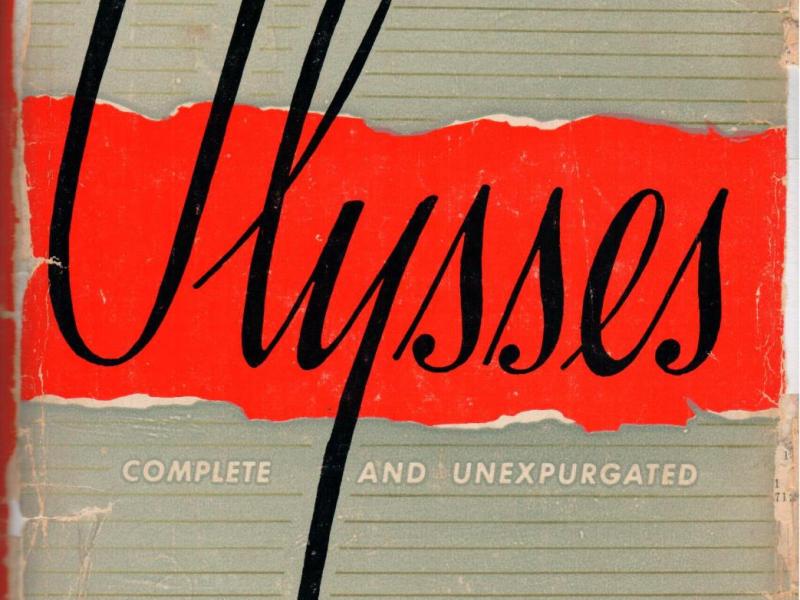
I look forward to doing a book review for Ulysses next, but a Reader Response based on my margin notes felt more appropriate given the nature of the work. Okay so this may not be as bad as I remember I mean it’s just some dudes eating breakfast and borrowing money from each other and then Stephen going to work to teach history and there are some funny observations and connections so I wonder if we’ll follow Stephen more or get back to Leopold well it looks like we are sticking with Stephen for awhile and he seems so incredibly broody…
Keep reading
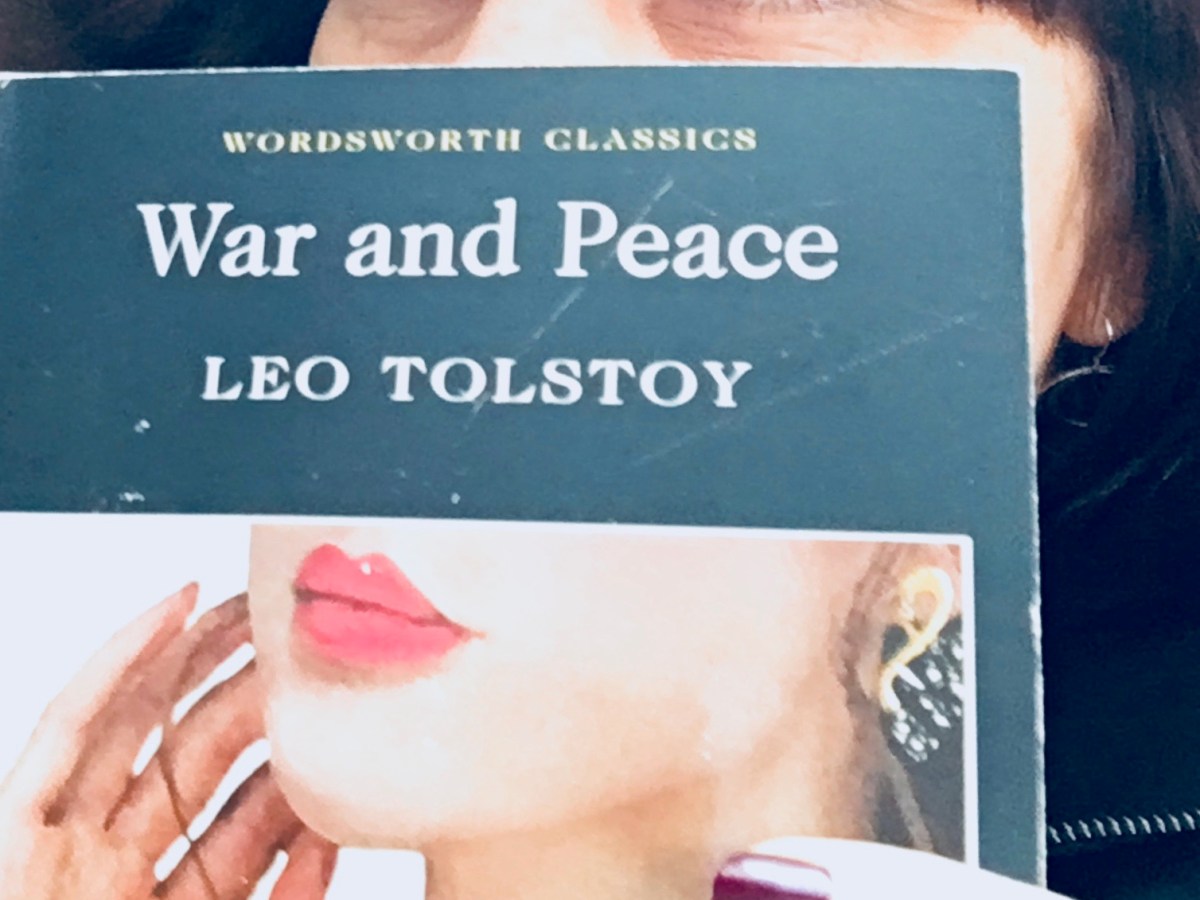
Reader Response: War and Peace
I loved War and Peace from the moment Pierre bumbled into scheming Anna Pavlovna’s party and proceeded to horrify everyone by fawning over Napoleon.
Keep reading
Reader Response: Thank You For Your Service
“Thank You For Your Service” was not optimistic or pessimistic, angry or trite. It was simply, overwhelmingly honest. Like, two boxes of tissues honest.
Keep reading
Book Review: Ulysses
I appreciate Joyce’s technique and experiments with style. I found his echoes of, and connections to, other literary works rather fun. I, in turns, enjoyed Joyce’s cleverness and found that cleverness eye-rollingly overdone.
Keep reading
Book Review: The Fire Next Time & Between the World and Me
In short, we…deeply need each other here if we are really to become a nation…
Keep reading
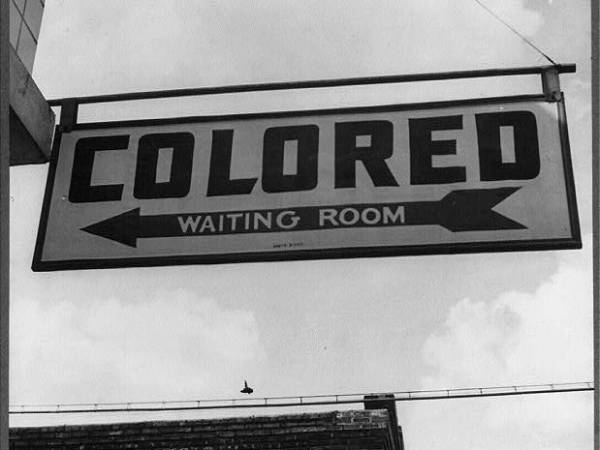
Book Review: Praying for Sheetrock
Melissa Fay Greene’s Praying for Sheetrock is a well-researched, detail-oriented, unhurried read about a tumultuous time in the history of McIntosh County, Georgia.
Keep reading

Book Review: Sapiens
The Vagabond Teen and I took Sapiens: A Brief History of Humankind by Yuval Noah Harari on the road this summer. We listened to the audio book on road trip days, read some chapters in our down time, and further dove into the subject of humankind, our biology, and our social history by watching videos about early humans and looking at what we’ve learned about our own deep ancestry through participation in National Geographic’s Genographic Project. Sapiens offers up what the title indicates–a view of human society and the way our biology and beliefs have influenced our development as a species over the course of…
Keep reading
Book Review & Library Lesson: Tribe
This book…will serve as a valuable learning tool to emphasize to young writers the importance of maintaining a clear main idea in their writing and of utilizing an organized system of citation to give credence to their work.
Keep reading
Book Review: Antifragile
I tackled Nassim Nicholas Taleb’s Antifragile slowly–both to reflect on Taleb’s ideas, and because reading this book is like hanging out with a brilliant and obnoxious friend who is best taken in small doses. Nearly a year later, reading the book’s Conclusion, I found Taleb had articulated exactly why I couldn’t stay away from this dense, sometimes fervently arrogant, work: It is hard to find people knowledgeable and confident enough to like to extract the essence of things, instead of nitpicking. (p. 421) The concepts Taleb puts forth in Antifragile are simple, and not new, but the thought behind those concepts is…
Keep reading
Book Review: A Little Life
This review contains spoilers. I am still emotionally reeling from A Little Life by Hanya Yanagihara. It is a brilliant and heartbreaking story that grows darker and more intense as it progresses. A Little Life begins as the story of four men whose friendship first develops in college. The characters are compelling from the outset, and they become even more so as their lives unfold, individually and in the context of their relationship to each other. To say that the story gains intensity as the author tightens focus one of the friends (Jude) seems inadequate. The slowly unearthed revelations about Jude’s past…
Keep reading
Book Review: Go Set a Watchman
I’m not sorry I read Go Set a Watchman by Harper Lee. But. I have a few words of caution for my fellow Mockingbird lovers still on the fence about whether to read Go Set a Watchman. I wish I had approached this work as the rejected manuscript of a very talented young writer, and not as a companion to the well-crafted and beloved To Kill a Mockingbird. I suggest you do just that if you decide to jump off the fence and read it. I wrote the following observations as I was reading: The Quick & Dirty Half-Way Review I found that my old…
Keep reading
Reading
-
This post is an edited, enhanced, and otherwise reworked version of an internal class blog post from a class called Motivating 21st Century Learners at Syracuse University. I am posting a series of these because the topics are close to my heart, they illustrate part of my library school journey, and I believe will get…
-
I had the pleasure last weekend of participating in a story time for military families on Fort Drum. Tell Me a Story is a program hosted by the Military Child Education Coalition and is intended to promote literacy and, according to the MCEC website, to “empower Military Children by using literature and their own stories in…
-
I am greeted as the “Lego Lady” when I enter my library and I couldn’t be happier about it. I’m not the first library Lego Lady, and I won’t be the last, but I’m glad I am one for the moment. A few weeks ago, I met with the library director and she mentioned that she…
-
So there we were…with the majority of our Reference Services and Information Literacy class behind us, and with two major projects ahead, one of them a Library Pathfinder. A pathfinder is essentially a topic guide that contains carefully chosen resources that provide a launching point for research. While I looked forward to the assignment itself,…
-
The crying started with a visit to the university library. It was the middle of our residency week, and we had spent the previous few days discussing the importance of keeping our focus as librarians on community, innovation, collaboration, and creation. I had embraced the concepts of roving and embedded librarians, empowering people through their very…
-
Our Title, My Friend, Was Blowin’ In the Wind One of the great pleasures of my summer 2011 gateway week in Syracuse was working with so many equally invested, passionate, and fun fellow students. Of the many group projects we did, our grand finale took the form of presenting at a poster session. I was…
-
Effective instructors are in tune with their students and able to shift gears with them. And they know when to pass out the mints.
-
My post about Ace the Library Dog led to some great questions and to a few friends sharing their experiences with similar programs. I thought I’d take the opportunity to share some a few interesting links regarding library dog programs. After exhaustive research (okay, after typing “library dog” into google), I struck gold in the…
-
Ace, the Northern Onondaga Public Library Dog, came to visit our class along with his human, Meg. Ace is a registered Therapy Dog and Canine Good Citizen who spends his time working split shifts between three branches in the NOPL system. He also comes with his very own barkcode–and is available for patrons to check…
-
In the final Thread of R. David Lankes’ The Atlas of New Librarianship (2011), we finally get to the librarian. In amongst the descriptions of skill sets, teamwork, processes, and curriculum, there is a statement which stops me in my tracks. Lankes proposes that in the case of deadlocked debate between new librarians and bibliofundamentalists,…
-
“This time, this information age? This is our age.” -R. David Lankes, The Atlas of New Librarianship, p.135 I am a sucker for a good call-to-arms style speech. My favorite movies (which mostly come from great books) all contain rousing pre-battle speeches. William Wallace rallying his fellow Scotsmen at the Battle of Stirling, Henry V…
-
Or, How Reading About Community Got Me Ruminating Over Collection Development Ironically, after writing my last few posts about how individuals, people, and communities must remain at the center of every thing we do as librarians, I read through Lankes’ entire Community Thread thinking about books. It may have been that I had just finished…
-
Librarians don’t own public libraries, communities don’t own public libraries, the individuals who make up our communities own public libraries. That ownership comes with privilege, and it comes with responsibility. Have I mentioned yet my conviction that libraries are about people? They are not about buildings or collections or how many computers you have available.…
-
If librarians are going to facilitate knowledge creation, we’d better learn the process through which knowledge is created. Throughout the Knowledge Creation Thread of The Atlas of New Librarianship, R. David Lankes focuses on Conversation Theory as a means of fostering knowledge creation. Conversation Theory, in my own significantly simplified definition, is the idea that…
-
I like having a mission. I like a solid foundation from which to spring into action and a bright goal toward which to work. The mission that R. David Lankes proposes in his recently published book, The Atlas of New Librarianship is right up my alley. According to Lankes, “the mission of librarians is to…