Meet the Parents (Maybe)
This is Part 10 of The Orphan in My Family Tree. What is usually the true tale of my ongoing search for information about the origins of my great great grandpa Fritz (who was orphaned in New York City in the late 1870s, and whose last name appears throughout his life as both “Brandt” and “Brand”) is today going to veer from truth to embrace speculation. My speculation in this case is based in research, but not proven through research. I hope you won’t mind.
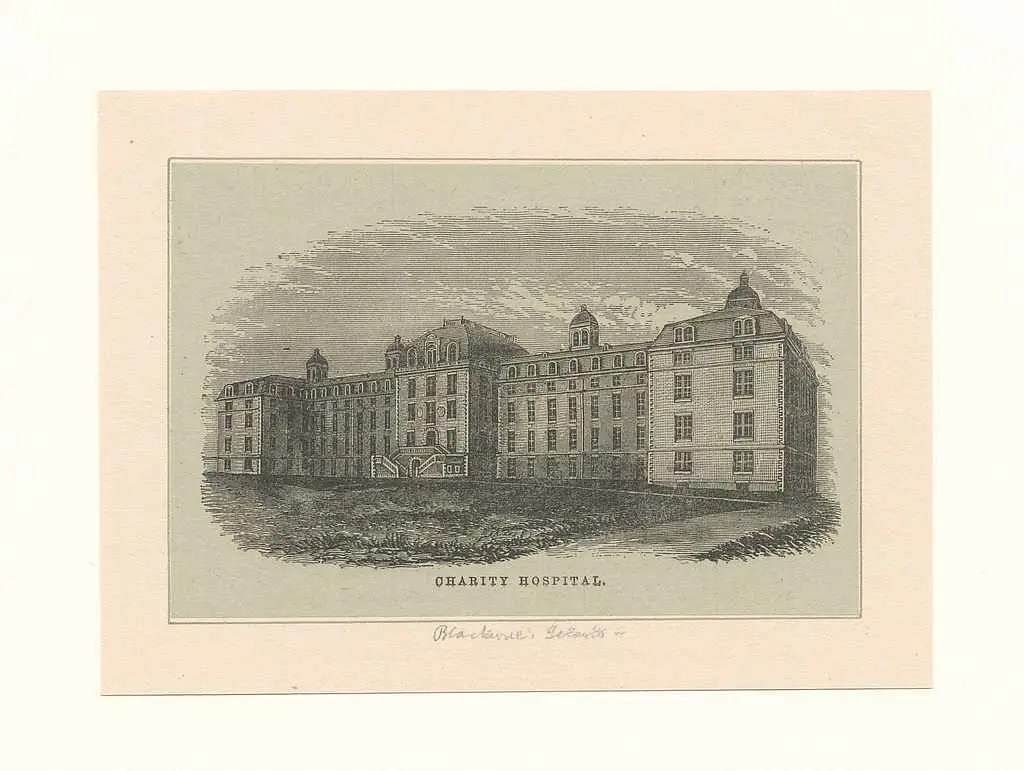
CC0 1.0 Universal Public Domain Dedication
Let’s begin with Elizabeth. Elizabeth Brandt died of endometrial cancer in the Charity Hospital on Blackwell Island on January 20th, 1880. She had been admitted to the hospital on December 12th, 1879. Her death certificate notes the secondary cause of death as “asthenia,” which is described as a profound loss of energy or strength, usually suffered from a chronic, debilitating condition. She worked as a domestic servant at the time of her death at age 35, and had been in the United States for thirty years, presumably arriving from her native Germany at the age of five. Her residence at the time of her death was 1120 1st Avenue, New York City.
On April 22nd, 1880, 38-year-old widower Frederick Brandt, a laborer who had lived in the United States for 14 years after immigrating from his native Germany, died of pneumonia and exhaustion after two days in the German Hospital at 4th Avenue and 77th Street in New York City. Frederick was buried on April 24th by the Department of Charity and Corrections, in a potter’s field of unknown location. I can’t help but wonder if he and Elizabeth both ended up in the mass graves on Blackwell Island. Frederick’s residence at the time of his death was 1120 1st Avenue.
New York City directories from 1879 and 1880 confirm that Frederick Brand lived at “h 1120 1st Ave” for at least a year prior to his death. When looking for a window into the life and lifestyle of the inhabitants of 1120 1st Avenue at this time, it is helpful that 1880 was a census year and therefore a year rich with data. Mapping Historical New York: A Digital Atlas creates a view into that window and into Manhattan’s and Brooklyn’s transformations during the late-nineteenth and early-twentieth centuries using census information. While the data from the summer of 1880, when enumeration took place for the census, may be months after the fact for our Brandt’s, it is still invaluable to understanding their world at the time. 1120 1st Avenue was a tenement building, housing fifty-three inhabitants over half of whom were native to New York, and the others coming from the midwestern United States, England, Ireland, and Germany. The people who lived in this building were fairly evenly split between male (24) and female (29). Those whose occupations were listed include eight construction workers, four food and grocery workers, one needle and trades garment worker, and one worker from the printer and publisher industry. We do not see our domestic worker or our laborer in this list of occupations, but both Elizabeth and Frederick died prior to the census enumeration in August when the data that informs this digital atlas was collected. These details add to the sense of life in this tenement building. For additional photographs of life in the New York City tenements, visit the Tenement Museum Photo Archive.
Census records enumerated on June 21st of 1880 for the nearby Five Points House of Industry, run by the Methodist New York Ladies’ Home Missionary Society, list three homeless children with the last name Brandt as residents there — eight-year-old Charles, six-year-old Fred, and three-year-old Sophia. Through Sophia’s birth record, I was able to identify her parents as Elisa Ehlers Brandt and Richard (Dick) Brandt, who lived on East 47th Street. Birth records for Fred and Charles remain elusive, though census records record their names together in an unalphabetized list of residents and their circumstance on those records mirror each other. Both Charles and Fred had been admitted when their father was living and their mother had died, both attended school, both were American born of German parents, and both had parents noted to have been “temperate,” meaning they abstained from alcohol or used it only in moderation. We know Elizabeth and Frederick Brandt had both died well before June, so the note in the U.S. Federal Census Schedule for Defective, Dependent, and Delinquent Classes regarding their father being alive could mean this young Fred is not ours, or it could mean the orphanage and census enumerator were relying on admission records. While nothing clearly conclusive links these boys as related, or even proves that this Fred Brandt is our Fritz, I’m holding this chapter tentatively in Fritz’s story for now.
I wonder if it was our Fritz who was the young Fred Brandt in the Five Points House of Industry in the summer of 1880, and whether he was there until he pops up in records later that fall in the New York Catholic Protectory. What we know as the Orphan Train movement, most frequently associated with Charles Loring Brace and his Children’s Aid Society, was a multi-faceted social movement in which organizations operated with very little oversight. For a deeper look at some of the issues associated with that lack of oversight, check out the 2019 article, The Orphan Train Movement, by Courtney Buchoski, available on the Theodore Roosevelt Center’s website. The orphan train movement was further complicated by the friction caused between the religious organizations that ran different placing out programs. Protestant-run placing out organizations like the Children’s Aid Society and social welfare programs like the Methodist Five Points House of Industry were accused of luring vulnerable Catholic children to convert, leading Catholic charities to create and run their own programs. You can learn more about this phenomenon in Mo Rocca’s Mobituaries podcast titled The Orphan Train: Death of an Experiment.
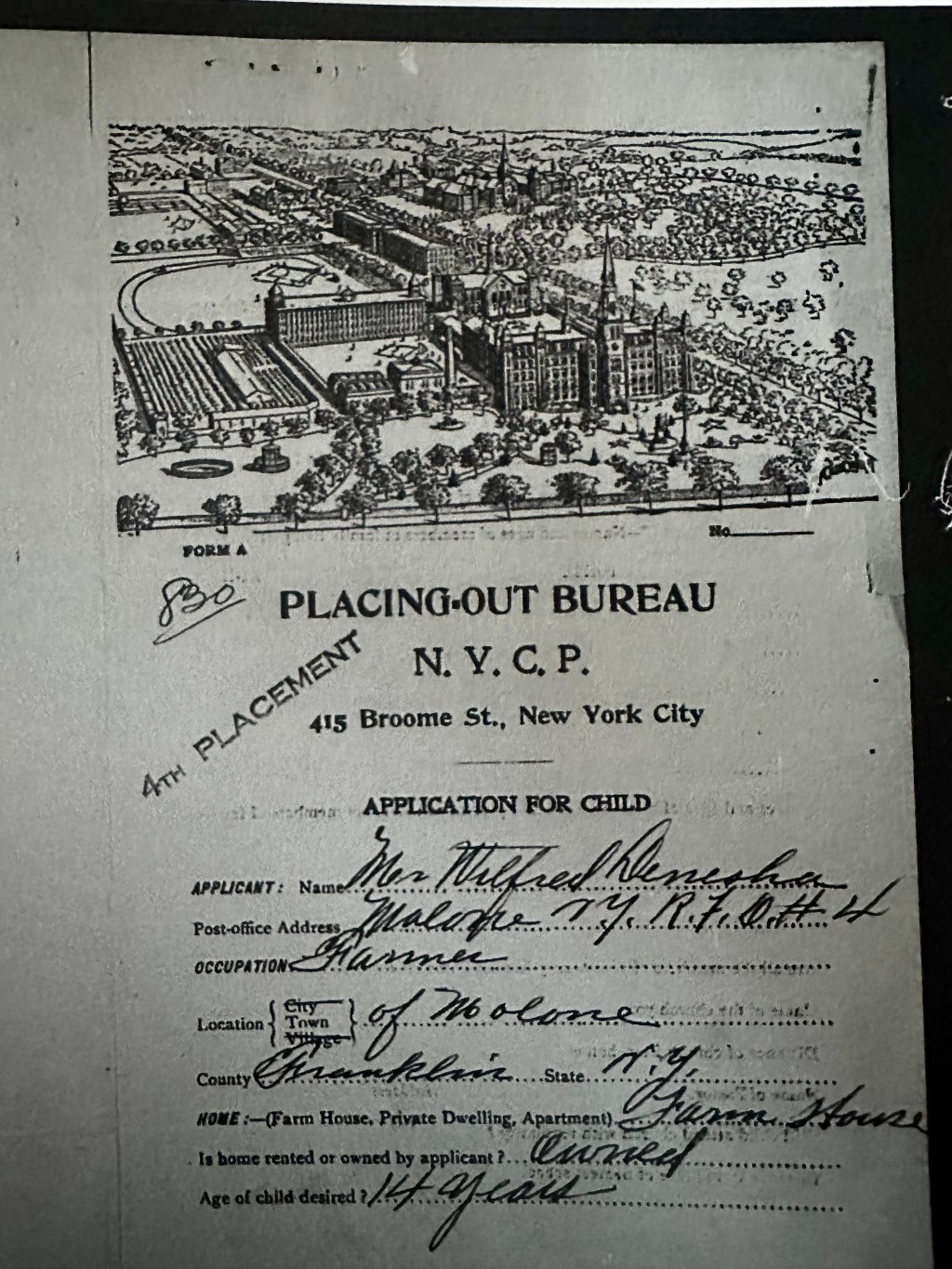
Enter the New York Catholic Protectory. It is where we find our first record through which we can trace a solid connection to our Fritz in the form of an admittance record from the New York Catholic Protectory’s Annual Report for 1880. Frederick Brand, age 7, was committed to the male department of the New York Catholic Protectory on August 3rd, 1880. His records reveal he was in good health at the time he was admitted. He had been born in New York and was Catholic, but had no prior religious instruction according to his records. Neither of Fred’s parents were living at the time he was admitted, and neither were intemperate. The Protectory’s annual reports further show that on September 19th, 1880, Frederick Brand, whose reception number is 14346, was moved to the female department, which could have been due to Fred’s age or to overcrowding. Around the time Frederick was committed, the Protectory had already been placing out boys to families in the midwest and the priests running the Protectory would already be planning the journey that would take Frederick west.
I will pick up Fritz’s journey, and that of the other boys who ended up on that train that would take them to Bow Valley with him, in my next post. For this post, I want to sit with my speculation and questions for a while. In my role as a school librarian I often ask students to share and reflect after we’ve read a story or learned something new, using the question prompt “What is one thing you notice and one thing you wonder?” I have so many “wonders” when it comes to this part of Fritz’s story.
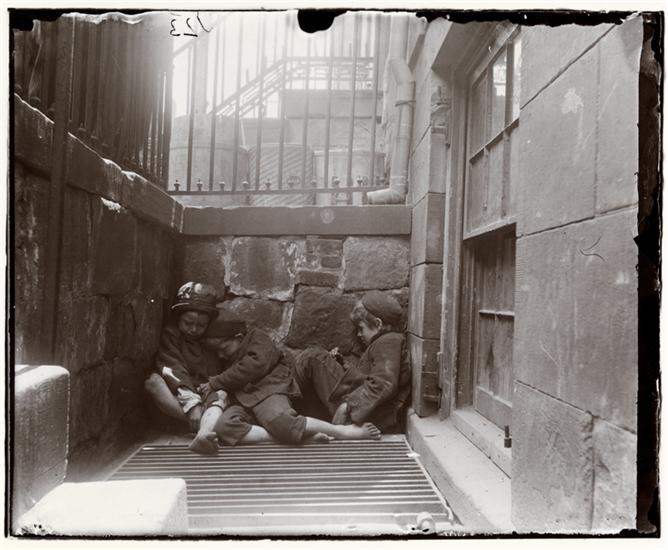
“Street Arabs in Night Quarters” (1888-1889) Click photo for link to NYT Archive.
If Elizabeth and Frederick were our Fritz’s parents, I wonder what happened to Fritz between their death and his arrival to the New York Catholic Protectory. Did he spend time with an elderly grandmother — or some other neighborhood “Oma” — as family lore suggests? I wonder if it was our Fritz who was initially in the Five Points House of Industry and whether he was there until moved to the New York Catholic Protectory in one of the pushes to collect and relocate Catholic orphans to raise them in the Catholic tradition. Did our Fritz find himself on the street, one of the many orphaned children brought to light and immortalized by photographer and reformer Jacob Riis, in his work Revealing “How the Other Half Lives” in the decade following Fritz’s journey west. Did Fritz find himself on the street before being committed to the Protectory? I think he must have in some capacity. The Protectory records differentiate between “intrusted” [sic] and “committed” residents. Was he one of the many homeless children whose Protectory admission records reveal they were arrested for pilfering food? Whatever the reason, it is clear that Frederick arrived at the New York Catholic Protectory in 1880 and then was placed out to Nebraska, arriving in Bow Valley during the summer of 1881 with a group of other boys who can be traced to various Protectory properties.
We’ll leave the “wonders” there for today.




Leave a Reply